A letter to the parent who’s been quietly worrying about Loose Anagen Syndrome
You’re brushing so gently.
You’ve switched shampoos more times than you want to admit.
You’ve googled late at night, zoomed in on old photos, and asked yourself if you’re overreacting.
Yet the same questions come back:
Why isn’t my child’s hair getting longer?
Why is it so wispy?
Why do strands slide out without a fuss?
If that’s you, take a breath—you’re not alone.
Many parents discover Loose Anagen Syndrome (LAS) or Short Anagen Syndrome (SAS) only after months (or years) of uncertainty.
And while only a clinician can diagnose, you can create a kinder daily routine that supports a fresher scalp, calmer strands, and more anchored-looking hair.
This post is your hand to hold—clear, practical, and hopeful about Loose Anagen Syndrome.
Quick note: this article is educational, not medical advice. It can help you know what to ask a pediatric dermatologist—and what you can do at home, starting today.
What LAS/SAS looks like in everyday life
-
Hair that rarely seems to gain length, even after a year
-
Delicate, flyaway strands that come out easily without pain
-
“Wispy” areas that make density look uneven—like thinning hair in spots
-
A child who isn’t bothered (no burning or itching), but the brush tells a story
In simple terms, in LAS, the hair’s “anchor” in the follicle is looser than usual, so strands shed early. In SAS, the growth phase tends to be shorter, limiting how long hair can grow. Neither is your fault. Neither means your child can’t have beautiful, confidence-boosting hair moments. It just means the routine needs to be extra gentle—and very clean.
Why “clean” matters more than ever with Loose Anagen Syndrome
Parents of Loose Anagen Syndrome-LAS/SAS kids tell us a pattern: heavy, glossy products seem to help—until they don’t.
Many conventional formulas rely on emulsifiers and occlusives to achieve a creamy slip, then incorporate one or two “hero” ingredients.
Residues quietly stack up, weighing down delicate fibers and leaving a film on the scalp that can make hair growth look slower and hair thinning more noticeable.
Switching to a silicone-free, nasties-free routine is like clearing the stage so each fragile strand has a fair shot. When roots feel fresh and light, hair tends to look fuller, fluffier, and easier to keep in place. (Grab our Silicone AVOID List and 12 Everyday Things Slowing Hair Growth: Hair Thinning Reversed—they’re short, parent-friendly reads you can use immediately.)
Nourishment vs. “Empty” Formulas—Why Belegenza Feels Different
When your child’s hair is delicate, every ingredient counts.
Most conventional products are built like this: a base of texture makers (emulsifiers, thickeners, slip agents) that create a creamy feel, then a tiny splash of 1–2 “hero” ingredients for marketing.
The result?
A nice scent and silky moment… followed by residue that weighs down fine fibers, makes hair thinning look worse, and leaves a film at the scalp that can cloud the look of hair growth.
Belegenza does the opposite. Our formulas are packed with meaningful, lightweight nourishment—not filler. Instead of leaning on heavy silicones and waxy occlusives, we focus on a clean, rinse-clear foundation that supports a fresher scalp and airy, stay-put strands.
What “empty” can look like in typical bottles
-
Long lists of emulsifiers/thickeners that exist mainly to build consistency
-
Silicone derivatives and heavy film-formers that create slip but linger at the roots
-
A couple of “star” botanicals tucked near the end of the list
-
Fragrance and dyes that offer experience, not support
What “full of nourishment” looks like with Belegenza
-
Aloe, seaweed extracts, panthenol (B5), biotin peptides, apigenin, oleanolic acid, castor seed extract, peppermint—the kind of ingredients that make hair feel stronger, more flexible, and easier to keep in place
-
Silicone-free & nasties-free, so roots feel light and clean (hello, fluff and lift)
-
Low-residue, child-friendly care that’s easy to use daily—even on non-shampoo days
-
Thoughtfully crafted so delicate strands detangle with kindness instead of friction
A 30-second label check for parents
-
Scan the first half of the list: do you see real botanicals there, or mostly texture agents?
-
Spot words like dimethicone, amodimethicone, cyclopentasiloxane? That’s likely a residue-prone film.
-
If the “hero” plant shows up near the end, it’s probably just a cameo.
The most important mindset shift: protect what you have
When hair sheds too early, the instinct is to chase “faster growth.”
That’s understandable—but with Loose Anagen Syndrome-LAS/SAS, your first win is to protect anchored hairs so they stay longer.
New strands are wonderful, but preserving today’s delicate fibers buys you the time you need.
Think of your routine as a gentle, daily “stay-put” strategy—fresh scalp, light nourishment, zero gunk.
A simple, kid-friendly routine (that won’t add stress to your mornings)
1) Wash for clarity, not just cleanliness
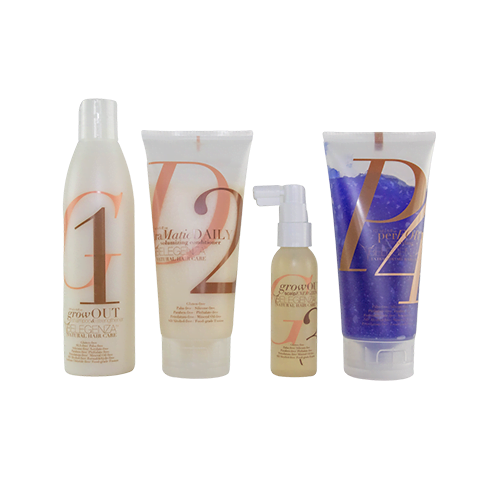
GrowOUT Shampoo & Strengthener—part of LAS & SAS Hair Essentials—gently lifts away buildup that can sabotage the look of growth, while bathing strands in supportive nutrients.
How to:
-
Fully wet the scalp. Use a dime-to-nickel amount and massage with fingertips (no nails).
-
Rinse thoroughly. If hair is longer or has product build-up, repeat.
-
Pat dry—no rough towel rub. Think “hug,” not “scrub.”
What you may notice: roots feel airy, detangling is kinder, hair looks less “slicked flat” by residue.
2) Feed the scalp daily—even on non-shampoo days
GrowOUT Scalp Energizing Spray delivers 17 trusted hair-support factors straight to the scalp in seconds. It’s the quiet miracle for busy families: consistent support without greasiness.
How to:
-
Part hair into a few sections and spritz lightly on the scalp.
-
Tap in with fingertips; no heavy rubbing needed.
-
Style as usual, using clean, non-follicle-clogging products. Check out the LAS & SAS Hair Kit for a comprehensive package that includes styling aids.
Why this matters: daily micro-care compounds. Parents often see fewer hairs in the brush and gentler detangling within weeks.
3) Detangle like a silk scarf
-
Use a wide-tooth comb starting at the ends, then move upward.
-
Add slip with a lightweight, silicone-free conditioner if you use one.
-
Pause if you feel resistance; support the strand with your other hand.
-
Avoid tight elastics; choose soft scrunchies or clips with smooth edges.
4) Sleep smart
-
A satin or silk pillowcase reduces snags.
-
Loose bedtime braids or a soft cap can prevent friction on delicate edges.
Why families choose LAS & SAS Hair Essentials
Belegenza is known for silicone-free, nasties-free, food-grade-inspired formulas that feel luxurious yet feather-light—perfect for delicate hair. The LAS & SAS Hair Essentials pairs targeted cleansing with daily scalp nutrition in a routine kids can actually live with.
What’s inside:
-
GrowOUT Shampoo & Strengthener– Clears residue and supports stronger-feeling strands that stay put longer.
-
GrowOUT Scalp Energizing Spray– Delivers 17 scalp-support factors for daily “anchoring” goodness between washes.
What parents notice:
-
More “stay,” less slide at the root area
-
Softer detangling and fewer mid-shaft break events
-
Airy lift that makes hair look fuller at the crown
-
Consistent support on busy, non-wash days
-
Peace of mind: free of sulfates, silicones, parabens, and salt; PETA-certified; crafted with FDA-approved cosmetic-use ingredients; gluten-free and kid-friendly
Pro tip from other LAS/SAS families: when you switch, switch everything. The biggest improvements come when shampoo, scalp care, and stylers are all clean. Our Hair Quiz can help you personalize the rest of your routine.
A month-by-month hope map (because progress hides in the little things)
Week 1–2:
-
Roots feel fresher, hair looks fluffier.
-
Detangling gets kinder; fewer “ouch” moments.
-
You notice fewer strands on the pillow and in the brush.
Week 3–6:
-
The crown looks fuller in photos taken under the same lighting.
-
Ends look less frazzled; ponytails “feel” thicker in your hand.
-
Your child says brushing “doesn’t hurt anymore.”
Weeks 7+ (one growth cycle and beyond):
-
Length may begin to catch up.
-
Density looks more even across the part line.
-
Most important: you feel calmer, more confident, and less alone.
Remember: every child is unique. With LAS/SAS, success looks like more anchored days and less friction everywhere—in the brush, on the pillow, and in your heart.
Gentle FAQs for caring parents
How do I bring this up with our doctor?
Share what you observe: easy, painless shedding; limited length over time; and photos showing little change month to month. Ask about LAS/SAS and whether a gentle pull test or exam is appropriate.
Can we still use leave-ins or stylers?
Yes—choose silicone-free, non-clogging options so you’re not undoing your shampoo’s hard work. Our Silicone AVOID List makes it easy to identify and avoid the culprits.
How soon might we notice something?
Some families see easier detangling and fewer hairs in the brush within weeks. Visible fullness and length usually follow with consistency.
Is LAS/SAS forever?
Many children improve as they grow. Meanwhile, a clean, gentle routine helps protect what you have while nature does its thing.
Your next kind step
If this sounds like your child, give them the gift of a fresh-feeling scalp and a lighter-than-air routine:
Start here: LAS & SAS Hair Essentials by Belegenza
Make it smarter: Peek at the Silicone AVOID List, 12 Everyday Things Slowing Hair Growth: Hair Thinning Reversed, and take the quick Hair Quiz to personalize your plan.
You don’t have to do everything at once.
You just have to start.
Every gentle wash, every light spritz, every kinder detangle is a quiet vote for your child’s confidence—and for your own peace of mind.
Get started now.
LAS & SAS Hair Essentials by Belegenza
- How to Build a Scalp-First Haircare Routine for Healthier, Fuller-Looking Hair
- Color WOW Dream Coat vs. Belegenza VirgINity Hair Repair: Which Is Better for Humidity Control?
- Vitamin D Derivatives, Scalp Science, and Why the Environment Around Hair May Matter as Much as Hair Itself
- NULASTIN vs GrowOUT: The New Era of Hair Fitness and Why Scalp Science Is Getting Smarter
- How to Create a Scalp-Friendly Hair Routine