When Every Strand Matters
Have you noticed more hair in your brush, a widening part, or hair that doesn’t seem as full as it once did?
Before buying another product promising thicker hair, there’s something worth investigating:
What’s actually in the products you’re already using?
Certain hair-care ingredients and formulations can contribute to dryness, scalp irritation, residue buildup, or breakage. When hair becomes fragile and starts breaking, it may look thinner even when the follicles are still producing hair.
Other forms of thinning begin beneath the scalp and may involve hormones, genetics, medications, nutrition, or medical conditions.
Understanding the difference between hair breakage and actual hair loss is the first step toward choosing better care.
At Belegenza, we believe what you leave out of a formula can be just as important as what you put into it.
Can Hair Care Ingredients Really Cause Hair Thinning?
Yes, certain ingredients or products can contribute to hair problems, but not always in the way people think.
There are three important distinctions:
-
Hair breakage: Dryness, friction, chemical damage, or inadequate conditioning can weaken strands until they break, making hair appear thinner.
-
Scalp irritation: Some people develop sensitivities or allergic reactions to certain ingredients, causing itching, redness, or inflammation.
-
Hair loss from the follicle: Genetics, hormones, health conditions, medications, and other factors can affect the hair-growth cycle itself.
A product that makes hair dry or brittle isn’t necessarily causing follicles to stop growing hair.
But if you’re trying to preserve fullness and length, preventing unnecessary damage matters.
Let’s look at five ingredient categories worth understanding.
1. Silicones: Coating the Hair AND the Scalp
Silicones are commonly used in hair-care products to create instant smoothness, shine, and slip.
But here’s something many people overlook:
Silicones can coat the scalp, too—not just the hair.
Depending on the silicone and formulation, these synthetic polymers can leave a film on the hair and scalp, including the skin around follicle openings.
On the hair, that coating can make it look smoother without necessarily improving the strand’s underlying condition.
On the scalp, residue can accumulate, particularly when multiple products are layered or cleansing doesn’t adequately remove them.
And while silicone coatings haven’t been established as a direct cause of follicular hair loss, Belegenza takes a different approach.
We prefer to nourish and condition the hair and scalp without relying on silicone films.
Our formulas provide moisture, flexibility, and conditioning through carefully selected ingredients rather than simply coating the hair to make it feel softer.
Some conditioning ingredients can penetrate the hair fiber, while others help protect its surface. Silicone films can affect how subsequent ingredients interact with the hair.
For us, scalp care matters just as much as caring for the strands growing from it.
Not Sure Which Ingredients Are Silicones?
Here’s the tricky part.
Silicones can appear under many unfamiliar ingredient names, and not all of them end in “-cone.”
Common examples include:
-
Dimethicone
-
Amodimethicone
-
Cyclopentasiloxane
-
Trimethicone
That’s why we created our complimentary Silicone AVOID List.
It helps you recognize common silicone ingredients and derivatives on product labels.
2. Fragrance Ingredients and Preservatives: Understanding Scalp Sensitivity
Fragrance makes products pleasant to use. Preservatives help protect formulas from contamination.
Both serve legitimate purposes.
However, some people react with allergies or irritation to certain fragrance components or preservatives.
Signs may include:
-
Scalp itching
-
Redness
-
Burning or tenderness
-
Flaking associated with irritation
-
A rash after using a particular product
A persistent inflammatory scalp condition can sometimes contribute to hair problems.
But don’t assume every preservative or fragrance ingredient causes hair loss.
What About Parabens and Phthalates?
Parabens are preservatives used in many cosmetic formulas. Some phthalates are used in fragrance preparations and other cosmetic applications.
Their safety has been studied and debated, but ordinary cosmetic use has not been established as a cause of hair thinning.
Belegenza chooses to formulate without parabens and phthalates.
That’s part of our formulation philosophy, not a claim that everyone using products containing these ingredients will experience hair loss.
What to choose instead: Formulas selected for your scalp’s needs, with ingredients you’re comfortable using and that don’t cause irritation.
If a product consistently causes itching or redness, stop using it and investigate the cause.
3. Drying Alcohols: When the Formula Leaves Hair Feeling Brittle
Not all alcohols are the same.
This distinction matters because ingredient names can be misleading.
Some short-chain alcohols, including alcohol denat. and isopropyl alcohol, are used as solvents or to help products dry quickly.
Depending on the concentration and overall formula, they may contribute to dryness in some hair types.
But other alcohols, including cetyl alcohol and stearyl alcohol, are fatty alcohols commonly used to soften and condition hair.
Those are not interchangeable categories.
The question isn’t simply whether a label contains the word “alcohol.”
It’s what kind of alcohol is present, how much is used, and what the complete formula is designed to accomplish.
What to Choose Instead
Look for conditioning ingredients that help hair stay moisturized and flexible.
Humectants such as glycerin and sorbitol help manage moisture, while well-chosen proteins and conditioning ingredients can improve the feel and resilience of the hair.
Hair that bends and moves without excessive breakage is more likely to retain the length you’re growing.
4. Mineral Oil and Petrolatum: Understanding Heavy Coatings
Mineral oil and petrolatum are petroleum-derived ingredients used in many personal-care products.
They can help reduce moisture loss by forming a protective layer on the skin or hair.
That doesn’t automatically make them harmful or mean they stop follicles from growing hair.
However, depending on the formulation and how you apply them, some people find these products too heavy for their hair or scalp.
They may leave hair feeling coated or weigh down fine hair.
And when you’re trying to maintain volume, that can be frustrating.
The Belegenza Approach
Belegenza is both mineral-oil-free and petrolatum-free.
We prefer to create moisture, softness, and conditioning through carefully selected ingredient combinations rather than relying on those occlusive ingredients.
Our goal is hair that feels moisturized and flexible while maintaining its natural movement.
Because when hair looks flat or weighed down, it can appear less full than it actually is.
5. The “Star Ingredient” Illusion: Why the Whole Formula Matters
Have you ever bought a hair product because one ingredient sounded extraordinary?
Biotin.
Argan oil.
Collagen.
A botanical extract with an impressive scientific name.
There’s nothing inherently wrong with highlighting a beneficial ingredient.
But one ingredient doesn’t tell you how the complete product performs.
The concentration, ingredient combinations, delivery, and overall formulation all matter.
A product containing an impressive ingredient isn’t automatically more effective than one without it.
And a long ingredient list doesn’t necessarily mean a better product.
Why We Believe in Ingredient Synergy
At Belegenza, we formulate with carefully selected ingredient combinations designed to work together.
Our products emphasize moisture, conditioning, flexible strength, and scalp-aware care.
Instead of building a product around one fashionable ingredient, we focus on what the entire formula is meant to accomplish.
That’s the difference between buying an ingredient name and choosing a thoughtful hair-care system.
Hair Care Ingredients: What They Do and What to Consider
| Ingredient Category | What It Does | Why We Believe It’s Worth Questioning |
|---|---|---|
| Silicones | Form synthetic films that create smoothness, slip, and shine on the hair and potentially the scalp. | Why repeatedly coat the hair and scalp, including the skin around follicle openings, when silicone-free conditioning alternatives are available? |
| Parabens | Preserve cosmetic products against microbial contamination. | Some parabens have demonstrated endocrine activity in laboratory studies. While this doesn’t establish harm from normal cosmetic use, why not consider alternatives? |
| Phthalates | Certain types are used in fragrance formulations and other cosmetic applications. | Some phthalates have raised concerns about endocrine effects. With hormones playing an important role in hair growth, we believe these questions deserve attention. |
| Short-Chain Alcohols | Help dissolve ingredients and allow products to dry quickly. | Depending on the formula, they may contribute to dryness. Is that the result you want when you’re trying to preserve fragile hair? |
| Mineral Oil & Petrolatum | Form petroleum-derived protective films that reduce moisture loss. | Why rely on petroleum-derived coatings when you want a thoughtfully conditioned scalp and hair that maintains natural movement? |
| Acrylates & PVP | Form films that provide styling hold and structure. | Could repeated application contribute to unwanted residue or stiffness? We prefer styling approaches that maintain flexibility without these ingredients. |
| Fragrance Components | Provide a pleasant sensory experience that makes hair care enjoyable. | Not all fragrances are formulated alike. Belegenza chooses phthalate-free fragrances as part of our thoughtful approach to hair and scalp care. We believe you can enjoy fragrance without relying on phthalates, though individual sensitivities can still occur. |
Our philosophy: An ingredient doesn’t have to be proven to cause hair loss before you decide it doesn’t belong in your daily routine.
At Belegenza, we consider what an ingredient does, how it interacts with the hair and scalp, and whether there’s an alternative that better fits our approach to hair care.
It’s not simply about avoiding ingredients. It’s about choosing ingredients with intention.
What Ingredients Should You Look for Instead?
Once you understand what you want to avoid, the next question becomes more interesting:
What do you want your hair-care products to accomplish?
At Belegenza, we believe a thoughtful routine should help:
-
Moisturize the hair and scalp
-
Improve flexibility and manageability
-
Support the strength of existing strands
-
Reduce unnecessary breakage
-
Maintain a comfortable scalp environment
-
Preserve natural movement and volume
That means choosing ingredients for what they contribute to the complete formula.
Our approach includes carefully selected botanical ingredients, peptides, proteins, and moisture-supporting components.
Some work within the hair fiber. Others provide conditioning or protective benefits at the surface.
The goal is meaningful care for the hair and scalp—not simply a temporary cosmetic effect.
Why Preserving the Hair You Already Have Matters
Here’s something many people overlook:
Hair can be growing normally at the scalp while breaking farther down the strand.
That means you may be growing new hair without seeing the length or fullness you hope for.
That is why conditioning, moisture, and flexibility matter so much.
Reducing unnecessary breakage helps preserve the hair you’ve already grown.
And appropriate scalp care helps you maintain a comfortable environment for the follicles producing your next strands.
Of course, not all thinning comes from breakage.
If you’re experiencing sudden shedding, widening areas of visible scalp, patchy hair loss, or persistent inflammation, consult a dermatologist to identify the cause.
But for everyday hair care, you can do a lot to improve how you treat the hair you have.
Hair responds to what you repeatedly do—not what you occasionally do.
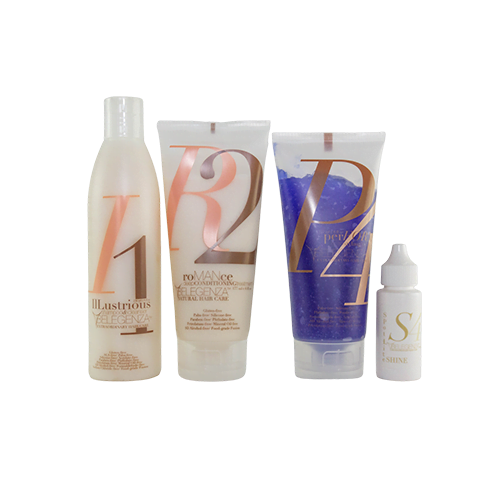
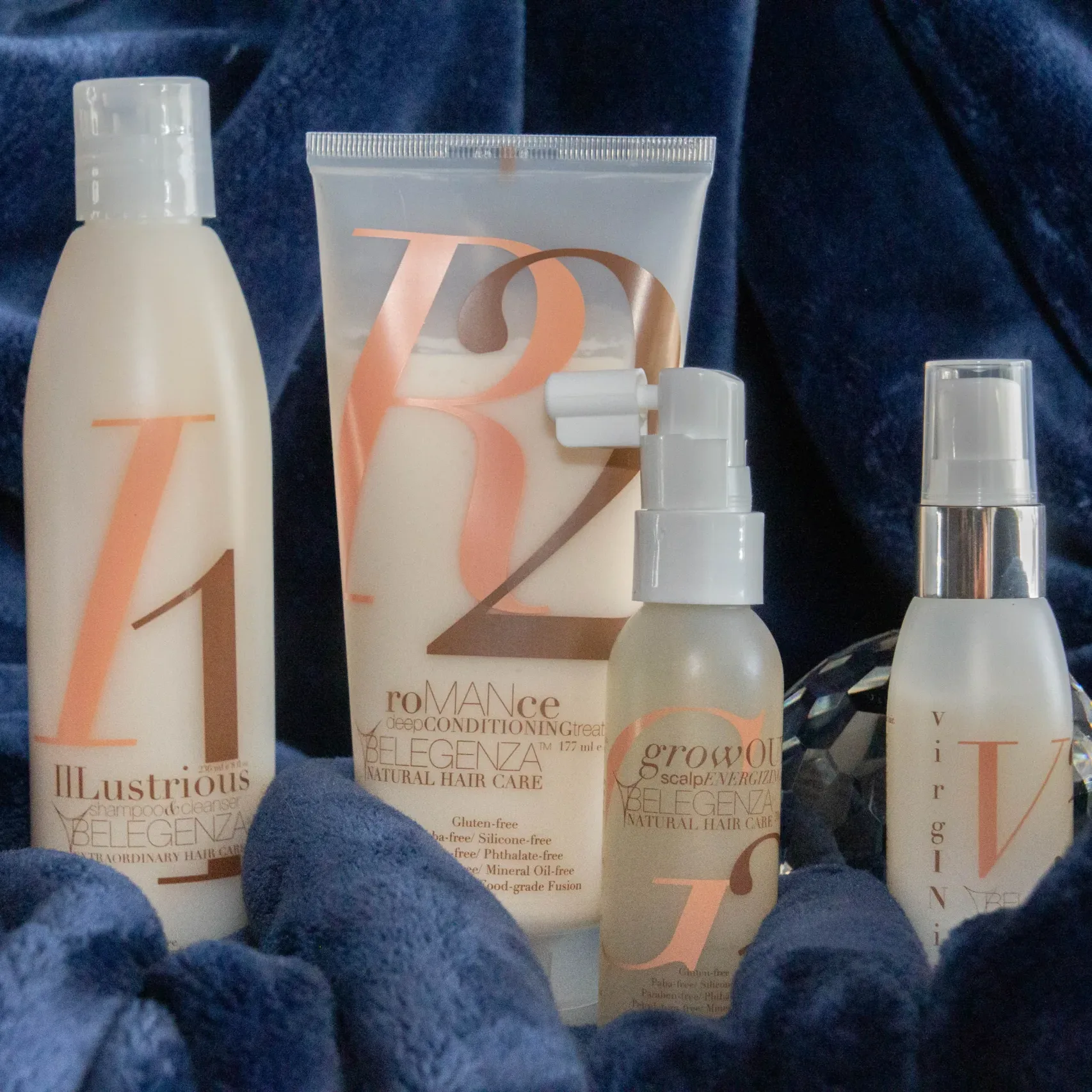
The Fast Hair Growth Package: A Four-Step Approach
For people who want a consistent, silicone-free routine focused on scalp care, moisture, and hair strength, we created the Fast Hair Growth Package.
Instead of relying on one product to do everything, the package brings together four complementary steps.
GrowOUT Shampoo & Strengthener
Cleanses the hair and scalp while providing moisture and strength through its growth-supportive formula.
DraMatic Daily Volumizing Conditioner
Delivers conditioning, moisture, and flexible strength with sea botanical proteins.
We believe an appropriately formulated conditioner can also help moisturize the scalp—not just the lengths and ends of the hair.
GrowOUT Scalp Energizing Spray
Provides scalp-focused support between shampoo days, helping make scalp care part of your regular routine.
PerForm Control Styling Gel
Provides styling control without silicone coating, so you can finish your style while staying consistent with your silicone-free routine.
Together, these products help you care for the scalp, support the condition of existing hair, and reduce avoidable damage.
They aren’t a treatment for every medical cause of hair loss, and results vary from person to person.
EXPLORE THE FAST HAIR GROWTH PACKAGE →
Before You Change Your Shampoo, Consider Your Everyday Habits
Sometimes the ingredients in your products are only part of the story.
How you wash, brush, style, and care for your hair can influence breakage and how much length you retain.
That’s why we created another complementary resource:
12 Everyday Things Slowing Hair Growth: Hair Thinning Reversed!
It’s a chance to look at familiar habits from a different perspective.
GET MY 12 EVERYDAY THINGS GUIDE →
The Belegenza Difference
When we began the Silicone-Free Era in 2004, we challenged the idea that beautiful hair required silicone coatings.
We believed we could formulate hair care differently.
That philosophy continues throughout Belegenza today.
Our formulas emphasize carefully selected ingredients, concentrated performance, moisture, flexible strength, and thoughtful scalp care.
We choose to formulate without silicones, mineral oil, petrolatum, parabens, phthalates, and acrylates, among other ingredients we prefer to avoid.
But our philosophy isn’t simply about what’s missing.
It’s about what we put in—and what those ingredients are intended to do for your hair and scalp.
We want you to understand your products, make informed choices, and enjoy hair that feels as good as it looks.
Here’s to loving your hair,
Alan & Cheryl
Belegenza Natural Hair Care
Frequently Asked Questions
What ingredients cause hair thinning?
Some hair-care ingredients or formulations can contribute to irritation, dryness, or breakage, which may make hair appear thinner. Allergic reactions to certain ingredients can also affect scalp comfort. However, true hair loss from the follicle has many possible causes, and most commonly discussed cosmetic ingredients haven’t been established as direct causes of hair thinning.
Can silicones coat both the scalp and the hair?
Yes. Depending on the formulation and how you apply a product, silicones can leave a film on both the hair strands and the scalp, including the skin around follicle openings.
Residue may build up when you layer products or don’t remove them well during cleansing.
Belegenza chooses silicone-free formulations because we prefer to condition and moisturize the hair and scalp without relying on silicone coatings.
Can Silicones Cause Hair Loss?
Silicones are synthetic polymers used to create smoothness, slip, and shine. They can form a coating not only on the hair but also on the scalp, including the skin surrounding the hair follicle openings.
And that’s something we believe deserves more attention.
Think about it: If you’re concerned about thinning hair, why repeatedly apply products designed to leave a synthetic film on the very scalp you’re trying to care for?
Depending on the formulation and your cleansing routine, silicone residue can build up on your hair and scalp.
Although research hasn’t established that cosmetic silicones directly cause follicular hair loss, you don’t have to wait for that evidence before choosing a different approach.
At Belegenza, we believe the scalp deserves thoughtful care—not unnecessary silicone coatings.
That’s why we’ve chosen to formulate without silicones since 2004, focusing instead on ingredients selected to moisturize, nourish, and support the hair and scalp.
Are Parabens and Phthalates Responsible for Hair Thinning?
Parabens are commonly used as preservatives, while certain phthalates appear in fragrances and other cosmetic formulations.
Both ingredient groups have raised scientific questions about potential effects on the body’s endocrine (hormonal) system.
And when hormones play such an important role in the hair-growth cycle, isn’t that worth considering?
Research has not established that ordinary cosmetic exposure to these ingredients directly causes hair thinning. However, questions about endocrine activity and long-term exposure deserve thoughtful scientific investigation.
At Belegenza, we don’t believe you need to wait for definitive evidence of hair loss before deciding which ingredients belong in your daily routine.
That’s why we choose to formulate without parabens and phthalates, focusing instead on carefully selected ingredients that support our approach to hair and scalp care.
Can shampoo cause hair breakage?
Yes. A cleansing routine that leaves hair excessively dry, combined with friction or rough handling, may contribute to breakage. Gentle cleansing followed by appropriate conditioning can help protect fragile hair.
Is Mineral Oil Bad for Thinning Hair?
Mineral oil and petrolatum are petroleum-derived ingredients commonly used to form a protective coating that helps reduce moisture loss.
But here’s something worth considering:
If you’re concerned about thinning hair, do you really want to rely on petroleum-derived coatings as part of your daily scalp-care routine?
These ingredients can leave a film on the hair and scalp. Depending on the formulation, they may also weigh down fine hair, contribute to a feeling of buildup, or require more thorough cleansing to remove.
Although mineral oil and petrolatum haven’t been established as direct causes of hair loss, we believe it’s reasonable to question whether they’re the best choice for the scalp environment you want to maintain.
At Belegenza, we choose a different approach.
Our formulas are mineral-oil-free and petrolatum-free, emphasizing carefully selected botanical ingredients, moisture-supporting components, and conditioning ingredients that help maintain softness, flexibility, and natural movement.
Because we believe beautiful hair deserves more than a coating. It deserves thoughtful care from scalp to ends.
Does conditioner help prevent hair thinning?
A properly formulated conditioner can help reduce breakage and support length retention. That may improve the appearance of fullness over time.
Appropriate conditioners can also moisturize the scalp. Conditioner does not directly reverse every cause of follicular hair loss.
How do I know if my hair is breaking or falling out?
Broken hairs are often shorter pieces that have snapped along the shaft. Shed hairs generally separate from the follicle and may have a small club-shaped bulb at one end.
Both can occur together. A dermatologist can help distinguish breakage from different types of hair loss.
What should I use if my hair is thinning?
Start by identifying whether you’re experiencing breakage, shedding, or reduced hair density.
Choose gentle cleansing, appropriate conditioning, and products that agree with your scalp.
If thinning is significant, persistent, or unexplained, seek a professional evaluation rather than relying on cosmetic products alone.
Related Reading
Sources & Further Reading
-
American Academy of Dermatology — Hair Loss: Tips for Managing
-
American Academy of Dermatology — How to Stop Damaging Your Hair
- How to Build a Scalp-First Haircare Routine for Healthier, Fuller-Looking Hair
- Color WOW Dream Coat vs. Belegenza VirgINity Hair Repair: Which Is Better for Humidity Control?
- Vitamin D Derivatives, Scalp Science, and Why the Environment Around Hair May Matter as Much as Hair Itself
- NULASTIN vs GrowOUT: The New Era of Hair Fitness and Why Scalp Science Is Getting Smarter
- How to Create a Scalp-Friendly Hair Routine