When Your Child’s Hair Never Seems to Grow…
When your child has Loose Anagen Syndrome or Short Anagen Syndrome, you may notice the differences in her hair long before anyone else does.
The ponytail never seems to get thicker.
Haircuts become less frequent because there simply isn’t much to trim.
Children the same age suddenly have long hair while your child still struggles to grow enough for a small ponytail.
You begin asking yourself questions.
“Will her hair eventually catch up?”
“Is this simply a slow-growing phase?”
“Am I worrying too much?”
Then someone mentions Loose Anagen Syndrome (LAS) or Short Anagen Syndrome (SAS).
Suddenly you’re searching for answers.
If this sounds familiar, we hope Isabella’s story encourages you.
Learn More About LAS & SAS
If you’re just beginning to learn about Loose Anagen Syndrome or Short Anagen Syndrome, we’ve created an educational Resource Center to help families better understand these uncommon hair conditions, explore frequently asked questions, and discover practical information gathered over many years of working with parents just like you.
➡ Explore Our LAS/SAS Resource Center
Not sure whether LAS or SAS may be contributing to your child’s hair concerns?
Our free 2-Minute Hair Quiz can help identify patterns and guide you toward the educational resources and product recommendations most appropriate for your situation.
➡ Take the Free 2-Minute Hair Quiz
A Message That Made Our Day
Recently we received this email from Lisa in the United Kingdom after her daughter, Isabella, had been using the Belegenza LAS/SAS Hair Kit for just eight days.
Lisa’s Message
Hi Alan
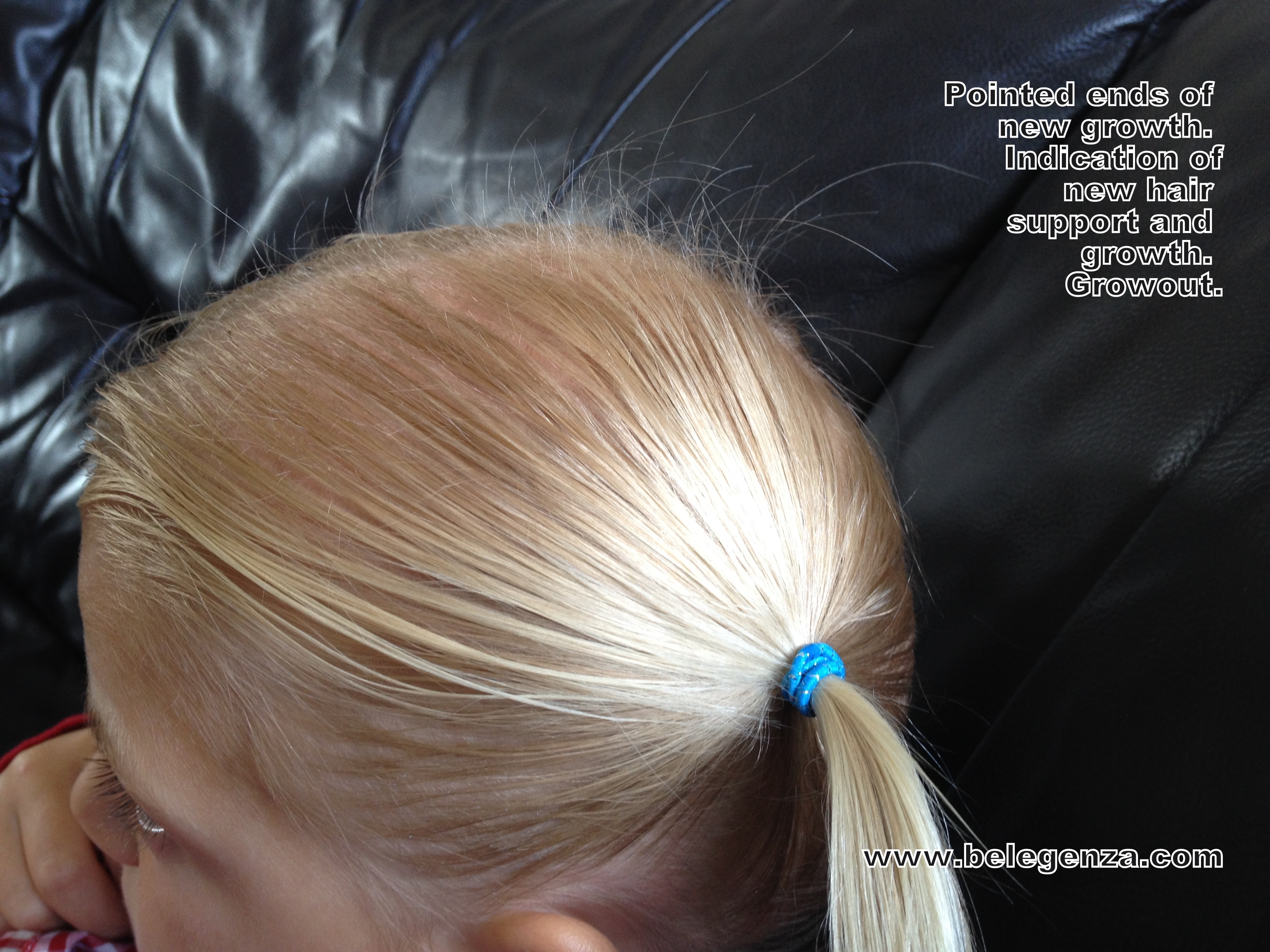
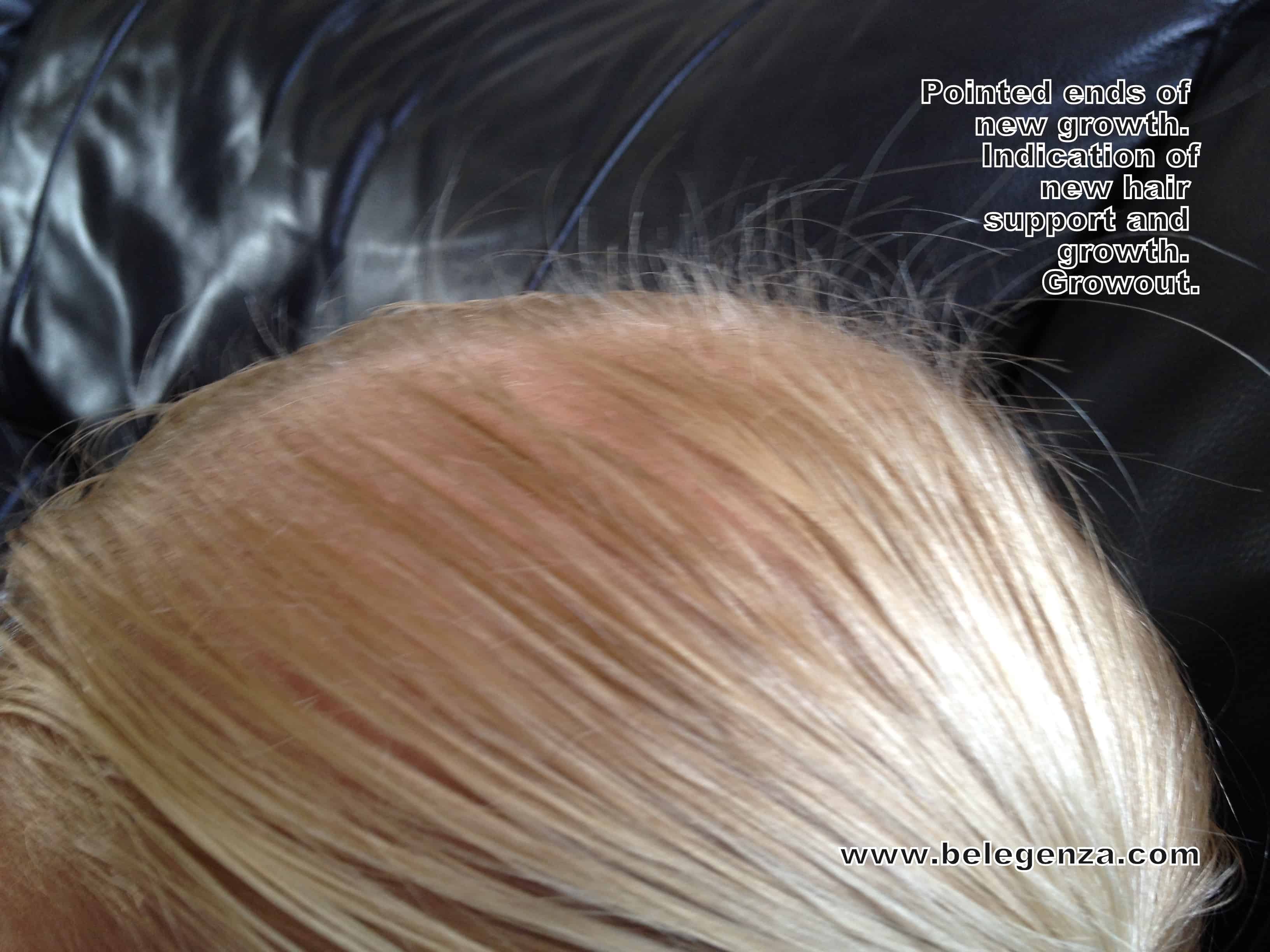
We have been using the Belegenza products (LAS/SAS Loose Anagen Syndrome / Short Anagen Syndrome Hair Kit)for 8 days now. This morning my daughter wanted her hair tied up for school (it was a struggle with her not having much hair)! I noticed quite a few hairs on the top of her scalp. Do
you think this is new hair growth or could this be breakage of hair? I have attached some photos for you to have a look at if you could give me your opinion please. I am more than happy for you to share the photos of my daughter Isabella or use them for the las/SAS study ; )
Thanks,
Lisa, UK
Alan’s Response
Dear Lisa,
Thank you for sharing Isabella’s photographs.
I can certainly understand why seeing those little hairs would catch your attention.
The first thing I noticed was that many of the shorter hairs appear to have naturally tapered ends rather than the blunt ends we often associate with broken hairs.
While photographs alone can’t provide certainty, that’s certainly an encouraging observation.
Something else also caught my attention.
Several of Isabella’s longer hairs appear to have remained in place.
Since only eight days have passed, those hairs obviously weren’t produced during that time. What makes them exciting is the possibility that they may be remaining anchored longer than they have in the past.
If that’s truly what’s happening, and new hairs are beginning to emerge as well, those are exactly the kinds of encouraging changes we’d hope to continue seeing over the coming weeks and months.
The most important thing now is to continue documenting Isabella’s progress.
Photographs taken over time often tell a much clearer story than a single moment ever can.
Let’s continue watching her journey together.
We find this very exciting and hope you and Isabella do as well.
Thank you for allowing us to share her story. Families willing to document their journey often become a source of hope and encouragement for other parents facing the same challenges.
Warmly,
Alan
Why Hair Anchoring Matters With Loose Anagen Syndrome
One of the frustrations many families describe with Loose Anagen Syndrome and Short Anagen Syndrome is that hair may seem unable to gain meaningful length because it releases before reaching its full growth potential.
That’s why parents often celebrate two important milestones:
- Existing hairs remaining in place longer than before.
- New hairs continuing to appear over time.
Both observations can be encouraging when they’re consistently documented over weeks and months.
Every child’s hair journey is different, which is why patience and consistent observation are so important.
Discover the LAS/SAS Hair Support Package
The products Lisa and Isabella were using are part of our LAS/SAS Hair Support Package, carefully assembled for individuals experiencing Loose Anagen Syndrome or Short Anagen Syndrome.
Each product was selected to help maintain a clean, healthy scalp environment while supporting healthy-looking hair using our gentle, silicone-free approach to hair care.
➡ Explore the LAS/SAS Hair Kit
Not sure if this package is the best fit?
➡ Take the Free 2-Minute Hair Quiz
What If This Is Only the Beginning?
Eight days isn’t enough time to tell the whole story.
But sometimes it’s enough time to notice that something may be changing.
That’s why we encourage families to take photographs.
Keep notes.
Celebrate small victories.
Those tiny hairs you notice today may become tomorrow’s ponytail.
Whether you’re just beginning to explore LAS or SAS or you’ve been searching for answers for years, we hope Isabella’s story reminds you that every journey begins with a single encouraging moment.
If you’d like to continue learning, we’ve created resources to help guide you every step of the way.
➡ Explore the LAS/SAS Resource Center
➡ Take the Free 2-Minute Hair Quiz
For additional medical background, families may also wish to review published information about Loose Anagen Hair Syndrome through the National Institutes of Health.
We’re honored to walk alongside families navigating Loose Anagen Syndrome and Short Anagen Syndrome, and we hope the information we share provides both knowledge and encouragement for the journey ahead.
Alan & Cheryl