A high hairline in women can simply be a natural feature—something you’ve had for as long as you can remember.
But sometimes, what looks like a high hairline is actually a hairline that has changed over time.
That’s an important distinction.
If you’ve always had a higher hairline, it may simply be part of your natural facial structure and genetics. If your hairline seems higher than it used to be, or you’re noticing thinning around the temples or front of your hair, it may be worth paying closer attention.
Let’s look at what can influence a woman’s hairline, how to style a naturally high hairline beautifully, and how to care for the hair you have.
What Causes a High Hairline in Women?
There isn’t one single cause.
For some women, a high hairline is simply genetic. Just as we inherit characteristics such as hair texture, density and facial features, the natural shape and position of the hairline can run in families.
That’s different from experiencing hair loss.
Hair density and the appearance of the hairline can also change over time. Women’s hair loss can be influenced by factors including age, genetics, hormonal changes, nutritional deficiencies, certain health conditions, medications, stress and hair-care practices.
Certain hairstyles matter, too.
Repeatedly wearing styles that pull tightly on the hair—including tight ponytails, buns, braids, and extensions—can stress the hair and follicles. Over time, repeated tension can contribute to a form of hair loss called traction alopecia, and the hairline can be one of the first places it shows up.
So before deciding what to do about a high hairline, ask yourself a simple question:
Has my hairline always looked this way, or has it changed?
If Your Hairline Is Changing, Start Here
If you’re noticing changes around your hairline, thinning, or wondering whether everyday habits could be working against your hair, we’ve created something for you.
12 Everyday Things Slowing Hair Growth: Hair Thinning Reversed!
It’s a free guide to everyday things you may not realize affect your hair—and simple changes you can start making now.
You don’t have to change everything at once. Sometimes simply knowing what to notice is the best place to begin.
Is a High Hairline the Same as a Receding Hairline?
Not necessarily.
A naturally high hairline may simply be your hairline.
A changing hairline is different.
If you’re seeing increasing thinning, a widening part, less fullness in your ponytail, thinning around the temples, or a hairline that appears to be changing over time, those can be signs of hair loss rather than simply a naturally high hairline.
That distinction matters because styling can change the appearance of a naturally high hairline, while unexplained hair loss deserves attention to what may be causing it.
If the change is sudden, significant or concerning, consider speaking with a dermatologist or other qualified healthcare professional. Hair loss has many possible causes, and understanding the cause can help determine the appropriate next step.
Styling Tips for Women With a High Hairline
If your hairline is naturally high, you don’t have to hide it.
But if you’d like to change the way it frames your face, a few styling choices can make a surprisingly big difference.
1. Experiment With Bangs
Bangs can change the visual proportions of the forehead and hairline without requiring a dramatic haircut.
Depending on your hair texture and face shape, consider:
-
Wispy fringe
-
Curtain bangs
-
Side-swept bangs
-
Fuller bangs
-
Soft face-framing layers
A stylist can help you choose a shape that works with your natural growth pattern instead of fighting it.
2. Try a Different Part
Sometimes something as simple as moving your part can change the entire balance of a hairstyle.
A soft or deeper side part can create movement around the front of the hair and shift visual attention away from the hairline.
Experiment. You may be surprised by how different your hair looks when you move the part by an inch or two.
3. Create Softness Around the Face
Hair doesn’t necessarily need to cover the hairline.
Layers, movement, texture, and strategically placed face-framing pieces can soften the transition between your forehead and hair without making the style look like it was designed to conceal something.
4. Be Careful With Very Tight Styles
If preserving the hair around your hairline matters to you, avoid repeatedly pulling it tightly back.
Ponytails, buns, braids, extensions, and other styles that repeatedly create tension can stress the hair and follicles. If a style hurts or causes persistent pulling around the hairline, loosen it.
5. Use Accessories Because You Like Them
Headbands, scarves, and hats can beautifully change the proportions of a hairstyle.
Use them because they complement your look — not because there’s something about your hairline that needs to be hidden.
If Your Hairline Seems to Be Changing
This is where we’d pay closer attention.
Compare photographs from a year or two ago.
Has the shape actually changed?
Are the temples becoming more visible?
Is the hair around the front becoming finer?
Is your part getting wider?
Does your ponytail feel less full?
Women’s hair loss doesn’t always look like the classic receding hairline commonly associated with men. Female pattern hair loss often appears as thinning at the top or center of the scalp or a widening part, though changes around the temples can also occur.
Also consider what you do to your hair repeatedly.
Tight hairstyles, repeated tension, excessive heat, and chemical processing can contribute to hair damage, breakage, or hair loss under certain circumstances.
That brings us to something we believe strongly at Belegenza:
Hair responds to what you repeatedly do — not what you occasionally do.
Your everyday routine matters.
Supporting Hair Where Growth Begins
Hair styling gets most of the attention, but hair growth starts at the scalp.
That’s why we believe a thoughtful hair-care routine should consider both the hair you can see and the environment surrounding the follicles producing it.
At Belegenza, our approach is scalp-first, hydration-driven, and silicone-free.
Instead of relying on silicone coatings to create a temporary appearance of smoothness, we focus on cleansing, hydration, conditioning, and carefully selected ingredients that support hair and scalp without unnecessary buildup.
Consistency matters here, too.
Gentle cleansing, appropriate conditioning, minimizing unnecessary tension, and careful care for fragile hair can become part of a routine designed to support the best-looking hair your follicles can produce.
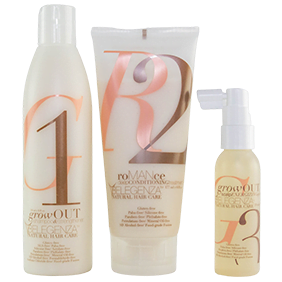
If hair growth and thinning concern you, explore our Fast Hair Growth Support Essentials—a simple, scalp-first two-step system featuring peptides and botanicals without silicone buildup.
At Belegenza, that’s where we begin:
Support the scalp. Care for the hair. Be consistent.
Because beautiful hair isn’t created by what you do once.
It’s shaped by what you repeatedly do.
Here’s to loving your hair — and caring for it well,
Alan & Cheryl
Frequently Asked Questions About High Hairlines in Women
Is a high hairline normal for a woman?
Yes. A naturally high hairline can simply be part of your inherited facial structure. A high hairline does not, by itself, mean you’re experiencing hair loss.
The more useful question is whether your hairline has always been high or appears to be changing.
What causes a high hairline in women?
Genetics can determine your hairline’s natural position and shape.
If the hairline has changed, however, hair loss can have many possible contributors, including genetics, age, hormonal changes, nutritional deficiencies, certain health conditions, medications, stress and hair-care practices.
Is a high hairline the same as a receding hairline?
No.
Someone can have a naturally high hairline without experiencing hair loss. A hairline that visibly changes over time—especially when accompanied by thinning elsewhere—is different and may warrant further attention.
What hairstyles work well for a high hairline?
Bangs, curtain fringe, side-swept bangs, face-framing layers, and different part placements can all change how a high hairline frames the face.
The best choice depends on your hair texture, density, growth pattern, face shape, and personal style.
Can tight hairstyles affect my hairline?
Yes.
Repeated tension from tight ponytails, buns, braids, extensions, and other tightly pulled styles can contribute to traction alopecia. The hairline is one of the first places the effects may become noticeable.
What should I do if my hairline suddenly looks higher?
If you’ve noticed a genuine change rather than a naturally high hairline—especially if you’re also experiencing significant shedding, thinning, scalp symptoms, or patches of hair loss—consider having it evaluated by a dermatologist or other qualified healthcare professional.
Women’s hair loss can have many causes, and identifying the cause is important.
Your Hairline Is Only One Part of Your Hair Story
A naturally high hairline doesn’t need to be “fixed.”
You can style around it, accentuate it, soften it, or simply let it be part of what makes your appearance uniquely yours.
But if your hairline is changing, that’s different — and noticing the change gives you an opportunity to pay closer attention to your hair, scalp, and everyday routine.
At Belegenza, that’s where we begin:
Support the scalp. Care for the hair. Be consistent.
Because beautiful hair isn’t created by what you do once.
It’s shaped by what you repeatedly do.
Sources & Further Reading
For additional information about hair loss in women, female pattern hair loss, and the effects of repeated tension on the hairline:
American Academy of Dermatology — information about female pattern hair loss and traction alopecia.
Cleveland Clinic — medically reviewed information about causes and signs of hair loss in women.
tags: Female High Hairline: Styling Tips & How to Retain Your Hairline, Female High Hairline: Styling Tips & How to Retain Your Hairline, in growth hair, receding hairline,
- How to Build a Scalp-First Haircare Routine for Healthier, Fuller-Looking Hair
- Color WOW Dream Coat vs. Belegenza VirgINity Hair Repair: Which Is Better for Humidity Control?
- Vitamin D Derivatives, Scalp Science, and Why the Environment Around Hair May Matter as Much as Hair Itself
- NULASTIN vs GrowOUT: The New Era of Hair Fitness and Why Scalp Science Is Getting Smarter
- How to Create a Scalp-Friendly Hair Routine